Fingerprint Lock For Android Phone 2026
DOSA Apps
18 October, 2026
36MB
Latest (2026)
Android 10+
19.4K
Description
Think about how many times a day you unlock your phone. Ten? Fifty? Typing a PIN every single time gets boring really fast, and people nearby can spot your pattern or code. That is exactly why a fingerprint lock became so popular. You touch a small sensor and your phone opens. No typing, no waiting.
In this article, I’ll explain in simple words what this technology is, how it works, and where you can use it, on phones, in apps, and even on doors. This is for information only, so read it like a friendly guide.
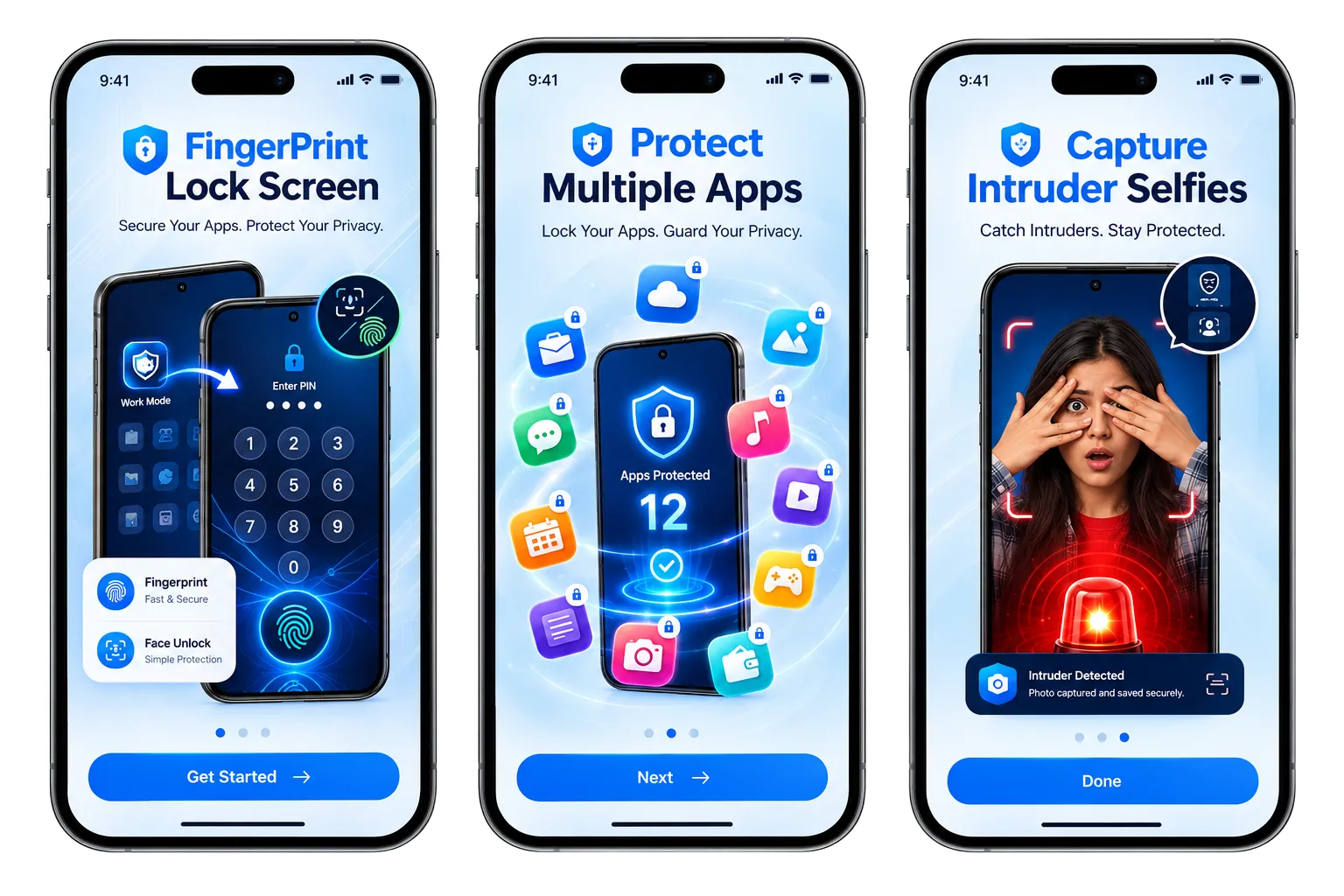
What Is a Fingerprint Lock?
A fingerprint lock is a security feature that opens a device or a door only when it recognizes your fingerprint. Every person has a different pattern of lines and curves on their fingertips. Even twins have different ones. Because of this, your fingertip works like a personal key that you carry everywhere.
Whether you type “fingerprint lock fingerprint” or just “Screen lock” into a search bar, you are usually looking for the same thing: a quick way to protect your stuff. And the idea is simple. The device remembers your fingertip pattern and compares it every time you touch the sensor.
How Does It Actually Work?
It sounds like science fiction, but the basic idea is easy to understand. There are three main steps.
Step one: scanning. When you place your finger on the sensor, it takes a picture or a map of your fingertip ridges.
Step two: converting. The device does not save a normal photo of your finger. It turns the pattern into a special code, a bunch of numbers that describe the ridges and their positions.
Step three: matching. Next time you touch the sensor, the device creates a new code and compares it with the saved one. If both match closely enough, it opens. If they don’t, it stays locked.
Most phones store this code in a protected area of the chip, separate from the normal apps. So other apps cannot just read it. That is a good design, because your personal data stays in a safer place.
Different Types of Fingerprint Sensors
Not every sensor works the same way. Here are the common ones you will see on phones and gadgets.
Capacitive sensors. These are the most common. They read the tiny electrical differences between the ridges and valleys of your finger. They are fast and quite accurate.
Optical sensors. These use light to take an image of your fingertip. Many phones with under-screen scanners use this type. They light up a small area of the display when you press.
Ultrasonic sensors. These use sound waves that you cannot hear. They build a detailed 3D-style map of your finger. They usually work better even if your finger is a little wet or dirty.
The sensor may be on the back, on the side power button, or under the display. Each position has its own fans. Side sensors are quick to reach, and under-screen ones feel modern.
How to Set Up a Fingerprint Lock on Android?
Setting it up takes only a couple of minutes. The menu names change from brand to brand, but the path is nearly the same everywhere.
- Open Settings on your phone.
- Find Security, Biometrics, or Passwords & Security.
- Tap Fingerprint (some phones call it Fingerprint Unlock).
- Enter your current PIN, pattern, or password if the phone asks.
- Tap Add fingerprint and follow the instructions.
- Place your finger on the sensor again and again, slightly changing the angle each time, until the progress bar fills.
- Tap Done.
A small tip from me: while scanning, cover the edges of your fingertip too, not only the center. This helps the phone recognize you even when you touch the sensor in a hurry. Also, wash and dry your hands before scanning. Oil, lotion, or water can make the first scan messy.
Once finished, go back and test it. Lock the screen, wait a second, and touch the sensor. If it opens smoothly, you are good to go.
Why a Fingerprint Lock Screen Is Worth Using
Your phone has your photos, chats, school notes, bank apps, and more. A fingerprint lock screen gives you a protective layer without slowing you down.
Here are some everyday benefits:
- It is fast. Touch and it opens, usually in less than a second.
- It is hard to copy. Someone can watch you type a PIN, but they cannot simply “watch” your fingerprint.
- It is convenient. You can use it even with one hand when you are carrying books or a bag.
- It works beyond unlocking. Many apps let you confirm payments or sign in using the same sensor.
Still, always keep a strong backup PIN or password. If your finger is injured, or the sensor stops responding, the backup is how you get back in. And please don’t use something obvious like 1234 or your birth year.
Using a Fingerprint Lock Application for Apps
Sometimes you don’t want to lock the whole phone, just a few apps. Maybe you hand your phone to a younger cousin to play a game, but you don’t want them opening your gallery or chats. This is where a fingerprint lock application helps.
These apps let you pick specific apps, such as messages, photos, or social media, and put a fingerprint check in front of them. Many people search for names like “applock fingerprint lock” to find this kind of tool. Some phones already have the feature built in, often under names like App Lock, Private Space, or Secure Folder. So check your settings first. You might not need to install anything.
If you do want a separate app, keep these points in mind:
- Download only from the official Google Play Store.
- Read the reviews and see how many people use it.
- Check which permissions it asks for. A simple lock app does not need access to your contacts or microphone.
- Avoid random websites offering free files.
You may also see people searching for things like “app locker pro fingerprint apk.” An APK is just the installation file for an Android app. The safe approach is to avoid unknown sources, because files from unverified websites can carry harmful software. Official stores check apps for safety, and that is worth more than any shortcut.
Fingerprint Door Locks for Homes and Offices
Fingerprints are not only for phones. A fingerprint door lock does the same job on a door. You touch the small scanner near the handle, and the door unlocks. No keys to carry, and no panic about losing them.
You will see these in offices, hostels, hotels, and many modern homes. If you search online, you will notice terms like “fingerprint door locks” and “door locks with fingerprint readers.” They mean basically the same thing: doors that read your fingertip instead of (or along with) a normal key.
How a Fingerprint Lock for Door Use Works?
A fingerprint lock for door use has a sensor, a small control unit, and a motor that moves the bolt. When your fingerprint matches, the control unit tells the motor to open the bolt. Most models run on batteries, and many also have backup options such as a PIN keypad, a card, or a physical key in case something goes wrong.
Things to Check Before Choosing One
If someone in your family is planning to install one, here is a simple checklist:
- Number of fingerprints it can store. A family needs space for several people.
- Battery life. Longer is better, and a low-battery warning is very helpful.
- Backup entry. A mechanical key or PIN option is a must.
- Build quality. Check that it feels sturdy and suits your door thickness.
- Weather protection. For outdoor doors, look for a water- and dust-resistant rating.
- After-sales support. A warranty and an installation guide save a lot of trouble.
Remember that a lock is only as good as the door and the frame holding it. A smart scanner on a weak door does not give you full protection.
Pros and Cons of Using Fingerprint Locks
Nothing is perfect, so let’s look at both sides honestly.
Advantages
- Quick and easy access
- No need to remember codes
- Personal and unique to you
- Works for phones, apps, and doors
- Can reduce the risk of someone guessing a password
Disadvantages
- Wet, dirty, or injured fingers can cause scan failures
- Cheap sensors can be less accurate
- Batteries and electronics can fail, which is why a backup is important
- Some people feel uneasy about storing biometric data
The good news is that modern devices store the fingerprint code securely on the device itself rather than sending it around. Still, it is smart to buy from trusted brands and keep your software updated.
Simple Tips to Get Better Results
Here are some small habits that make your fingerprint lock work smoothly:
- Register more than one finger. Add both thumbs and an index finger. If one hand is busy, the other works.
- Register the same finger twice. This gives the sensor more samples to compare, and often improves accuracy.
- Keep the sensor clean. Wipe it gently with a soft, dry cloth.
- Be careful with screen protectors. A thick or badly fitted one can confuse under-screen sensors. Choose one that says it supports fingerprint scanning.
- Update your phone. Updates often improve how well the sensor works and fix security issues.
- Rescan when things change. If your fingers feel dry in winter or your scans start failing, delete the old print and add it again.
Frequently Asked Questions
Is a fingerprint lock safe?
For everyday use, yes. It is much safer than having no lock or using a very simple PIN. For extra care, keep a strong backup password.
Can it work with wet hands?
Usually not so well. Water changes how the sensor reads your fingertip. Dry your hand and try again.
What if I cut my finger?
Small cuts may affect scanning for a while. Use another registered finger or your backup PIN.
Does the phone save a picture of my finger?
No. It saves a coded version of the pattern, not a normal photo, and it stays protected on the device.
Can I use it for payments?
Many phones and apps allow it, but you can always turn the option off in the settings if you prefer typing a PIN.
Final Thoughts
A fingerprint lock is one of those small features that quietly makes life easier. It saves time, adds a layer of protection, and is simple enough for anyone to use. You can set it up on your phone in a few minutes, add it to specific apps for privacy, and even choose a smart door model for your home or office.
Just remember the basics: register more than one finger, keep a strong backup code, install apps only from official stores, and buy door hardware from trusted brands. If you follow these steps, you will enjoy both the speed and the peace of mind that biometric security offers.